
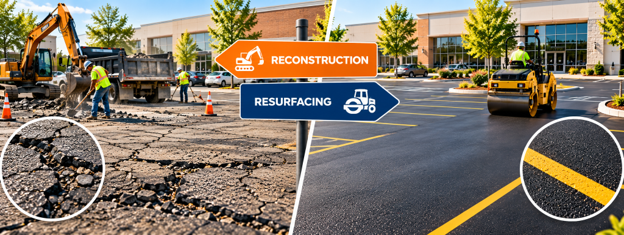
A parking lot with cracks and rough patches doesn’t always need to be torn out. But a lot that keeps failing in the same places may be telling you something deeper is wrong. Knowing the difference can save you from paying twice.
This post explains when resurfacing makes sense and when pavement reconstruction for commercial sites is the smarter investment.
Why Commercial Pavement Services Matter
Commercial surfaces take a beating. Daily traffic, weather, loading activity, and constant exposure wear them down faster than most owners expect.
Without routine commercial pavement maintenance, small issues can grow into larger repair needs, safety concerns, and higher replacement costs. Timely service protects curb appeal, improves usability, and supports long-term pavement performance. Experienced commercial pavement contractors can recommend the right fix for each site, whether that is crack repair, resurfacing, striping, or full reconstruction.
When Resurfacing Is Usually the Right Call
Resurfacing adds a new surface layer over pavement that is still structurally sound. In general industry practice, it suits lots where the damage is mostly on top.
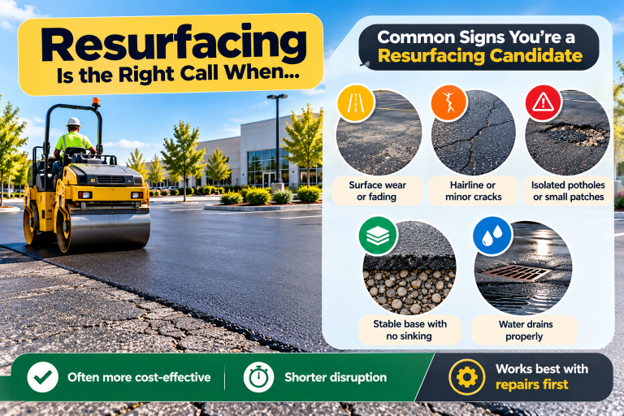
Signs Your Pavement May Be a Resurfacing Candidate
● Surface wear, fading, or light raveling across the lot
● Hairline or minor cracks that have been sealed or can be repaired
● Isolated potholes or small patches, not widespread failure
● A stable base with no soft, sinking, or shifting areas
● Water that drains properly off the surface
Resurfacing often costs less and disrupts business for a shorter time than rebuilding. It works best when it is paired with repairs first. Pavement needing commercial pavement crack repair before a new surface goes down is common, and skipping that step can shorten the life of the work.
When Pavement Reconstruction for Commercial Sites Becomes the Better Choice
Reconstruction goes deeper. Instead of covering the surface, the work addresses the layers beneath it. That matters when the problem starts below the asphalt you can see.
Failures That Keep Coming Back
If the same potholes reopen after patching, or cracks return soon after repair, the surface is probably not the real problem. A new layer over a failing structure tends to inherit the same defects, sometimes within a short time.
Look for these patterns:
● Alligator cracking (a web of connected cracks) across large areas
● Ruts or depressions where vehicles travel or park
● Patches that have been patched again
● Pavement that flexes or feels soft under load
Drainage Problems
Water is one of the biggest threats to pavement. Standing water, low spots, and poor runoff can soak into the base and weaken it from underneath.
Resurfacing alone may not correct drainage. If water collects in the same areas every time it rains, the grading may need attention as part of a larger plan.
Base and Structural Conditions
Pavement is a system. The asphalt layer depends on the base and subgrade beneath it to carry loads.
When the base is weak, wet, or too thin for the traffic it carries, the surface above it will keep deteriorating. Heavy trucks, delivery routes, and loading zones put extra stress on these layers. This is where reconstruction becomes worth serious consideration.
Resurfacing vs. Reconstruction at a Glance
| Condition | Often points toward resurfacing | Often points toward reconstruction |
|---|---|---|
| Cracking | Minor, limited, repairable | Widespread, interconnected, recurring |
| Potholes | Few and isolated | Frequent, repeated after patching |
| Drainage | Surface drains well | Standing water or low spots persist |
| Base condition | Stable and firm | Soft, sinking, or failing |
| Failure history | Occasional repairs | Same areas fail repeatedly |
Pavement rarely fits neatly into one column, and many lots show signs of both.
Why an On-Site Assessment Comes First
Photos and descriptions can only tell you so much. The right answer depends on traffic loads, age, soil, drainage, and the history of repairs on your property.
An on-site assessment helps answer questions like these:
● Is the damage limited to the surface or tied to the base?
● Would repairs plus resurfacing last, or only delay a bigger job?
● Are certain areas, such as loading zones, failing faster than others?
● Does drainage need to be addressed alongside the pavement?
Be cautious about anyone who quotes a solution without seeing the site. A fair assessment may confirm that resurfacing is enough, and that is a good outcome.
What the Company Offers
Yellow Dawg Asphalt supports commercial properties with routine maintenance, crack repair, resurfacing, striping, and pavement reconstruction for commercial sites. Its approach centers on recommending the right maintenance and repair solution for each property instead of applying one fix everywhere.
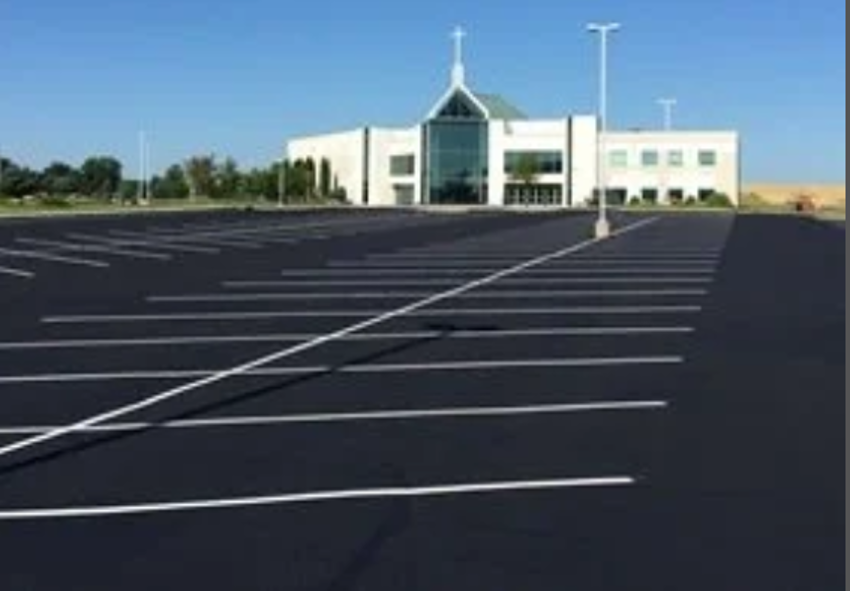
Once the pavement work is done, fresh parking lot striping helps restore clear traffic patterns and organized parking. Planning both together can also make scheduling easier for tenants.
FAQs
How do I know if my parking lot needs resurfacing or reconstruction?
Look at how widespread the damage is and whether it keeps returning. Surface-level wear points toward resurfacing, while recurring failures often suggest a deeper problem. An on-site assessment gives the clearest answer.
Is resurfacing cheaper than reconstruction?
Generally, yes, because it involves less work. But resurfacing over a failing base can cost more in the long run if the problems come back.
Can drainage problems be fixed with resurfacing?
Sometimes minor drainage issues can be improved, but persistent standing water often needs a closer look at grading and the layers below.
Will my business have to close during the work?
That depends on the scope and lot layout. Ask your contractor about phasing so part of the lot stays usable where possible.
Should I repair cracks before resurfacing?
Usually, yes. Untreated cracks can reflect through a new surface, so repairs normally come first.
Choose the Fix That Fits Your Pavement
Resurfacing suits sound pavement with surface wear. Reconstruction suits pavement with deeper structural, drainage, or base problems that keep returning. Telling the two apart takes a close look at the site.
If you are weighing your options, Yellow Dawg Asphalt can assess your property and explain whether resurfacing or pavement reconstruction for commercial sites makes more sense.
Reach out to discuss your pavement needs.