
How Long Does Asphalt Pavement Reconstruction Actually Take?
A cracked, sunken parking lot doesn't fix itself, and most property owners already know that. What stops many of them from acting isn't the cost or the hassle; it's the uncertainty around time.
How long will the lot be out of commission? Will it disrupt customers, tenants, or daily operations? These are fair questions, and they deserve straight answers.
Asphalt pavement reconstruction moves through several distinct phases, and the total timeline depends on more than just lot size. This blog walks you through each stage, what takes time and why, and what you can do to plan around it.
The Phases of Asphalt Pavement Reconstruction and Their Timelines
Reconstruction isn't something that happens in a single day or even a single push of work. It builds through stages, and each one needs to be done properly before the next one starts. Rushing any phase tends to show up later, usually in the form of cracking, uneven surfaces, or drainage problems that come back faster than expected. Here's what the process actually looks like on the ground.
Site Assessment and Planning
Before a single piece of equipment arrives, someone needs to walk the property and understand what's actually there. That means checking the depth of the existing damage, evaluating how water drains across the surface, and looking at the condition of the subbase beneath the asphalt.
This part of the job typically takes a few hours for smaller lots and up to a couple of days for larger commercial properties. If drainage issues or subbase failure turn up during the assessment, that adds time to planning because those problems need to be addressed before any paving begins. Depending on your location and the scope of work, permits may also be required. Permit processing varies widely; some municipalities turn them around quickly, while others take a few weeks.
Demolition and Removal of Existing Asphalt
Once the plan is in place, the old asphalt comes out. This is one of the more physically demanding parts of the project. The existing surface gets broken up, loaded, and hauled off the site entirely.
For a standard commercial parking lot, demolition usually takes one to three days. A thicker existing surface or a particularly large lot will push that toward the higher end. Rain can slow this phase down considerably, so contractors keep a close eye on the forecast during this window.
Subbase Preparation and Grading
With the old surface gone, the focus shifts to what's underneath. The subbase gets graded, compacted, and stabilized before anything else happens. This is the phase that most people don't think about, but it's the one that determines how long the finished pavement actually holds up.
A well-prepared subbase handles water correctly and distributes load evenly. A poorly prepared one leads to premature cracking and soft spots, sometimes within just a few years. On a mid-sized commercial lot, subbase work usually takes one to two days. Soft spots, poor natural drainage, or tree root intrusion can extend that, sometimes by several days, depending on how much correction is needed.
Asphalt Paving and Compaction
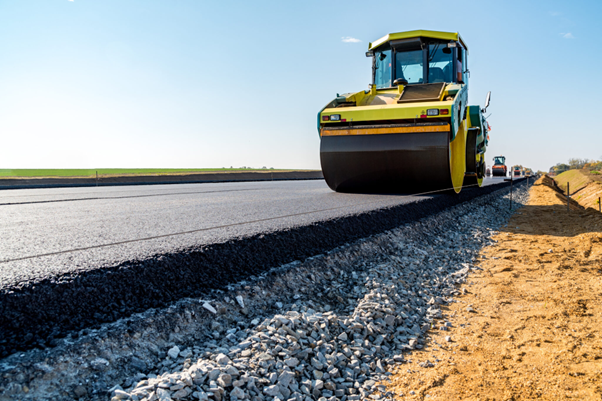
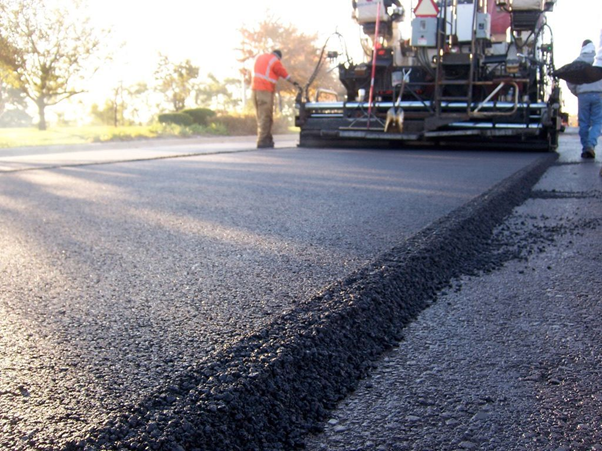
This is the phase most people picture when they think about reconstruction. Hot asphalt gets laid in layers and compacted with heavy rollers. The work itself moves fairly quickly; most standard commercial lots get paved in one to two days.
After the final layer goes down, the surface needs time to cool and cure. Light vehicle traffic is typically safe within 24 to 48 hours. Line striping and any finishing work follow after curing, which adds roughly another day to the overall schedule. So from start to finish, a typical commercial lot runs somewhere between five and ten working days, assuming conditions cooperate.
How We Approach Reconstruction at Yellow Dawg Asphalt
At Yellow Dawg Asphalt, we've been doing this work long enough to know that no two projects unfold exactly the same way. As a franchise brand of Jet-Black, the largest pavement maintenance company in the U.S., we've completed over 500,000 jobs since 1987, with more than 25,000 jobs finished last year alone. That kind of volume builds practical knowledge that goes well beyond a standard contractor's experience.
We operate through 125 locally owned and operated locations across 18 states, backed by 9 federally protected trademarks. Our services cover the full scope of commercial pavement needs: full-scale asphalt paving, hot asphalt patchwork, sealcoating, crack sealing, line striping, and concrete work, including sidewalks, curbs, and ramps.
We work as a single point of contact for complete pavement maintenance, repair, and replacement, and we connect clients to nationwide partners when a project calls for it.
We have brand names worth protecting, and that means we don't cut corners or sacrifice quality at any stage of the job. When you work with us for asphalt pavement reconstruction, you get a team that understands the full picture, from subbase preparation to the final stripe on the pavement.
Ready to get a realistic timeline for your property? Contact Yellow Dawg Asphalt today for a fast, free written quote.
FAQs
-
Most commercial parking lots take between five and ten working days from demolition to final striping. Lot size, subbase condition, and weather are the biggest variables that push a project toward either end of that range.
-
Often yes. Many contractors work in sections, keeping part of the lot open while reconstruction moves through the rest. Talk to your contractor during planning to see if a phased schedule works for your property.
-
Resurfacing adds a fresh layer over the existing pavement. Reconstruction removes everything down to the subbase and rebuilds from the ground up. Reconstruction is the right call when the underlying structure is compromised, not just the surface.
-
Most freshly paved surfaces handle light traffic within 24 to 48 hours of the final layer being applied. Your contractor will give you a specific window based on conditions at the time of the job.
-
It does. Rain and low temperatures can stop paving work entirely. A reliable contractor will watch the forecast closely and build some scheduling flexibility from the start, but delays from weather are sometimes unavoidable.