How Pavement Line Striping Affects Traffic Flow in Busy Commercial Parking Lots
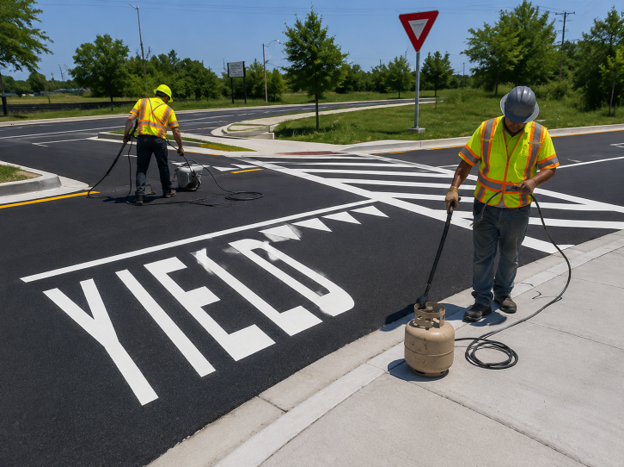
Have you noticed how some busy commercial parking lots feel easy to enter, easy to move through, and easy to leave, even during peak hours? That does not happen by luck. It comes from layout planning, visible pavement markings, and smart vehicle guidance from the moment a driver turns in. Pavement line striping helps you shape movement across the lot, guide parking decisions, support foot traffic, and create a smoother flow for customers, tenants, delivery drivers, and staff.
In a crowded retail centre, office complex, medical plaza, or mixed-use property, that kind of order improves the entire arrival experience without changing the footprint of the site.
Why Traffic Flow Breaks Down in Commercial Parking Lots
Commercial lots handle more than parked cars. They manage arrival waves, delivery vans, short-stay visitors, pedestrians, accessible parking, service access, and exit movement, often at the same time. When the layout does not match that pattern, the lot starts feeling crowded even when space is still available.
The issue usually starts with generic line painting. A standard layout may mark stalls, but it may not guide how vehicles should circulate. Drivers then slow down near entries, pause in the middle of aisles, turn wider than needed, or loop through the lot twice before they park. That creates a heavier feel across the property.
Traffic flow improves when the lot works like a system. Drivers need visual direction early. Pedestrians need marked routes. ADA spaces need the right placement. Loading and pickup zones need separation from general parking. Once those pieces line up, the property starts handling volume with less friction and a stronger first impression.
How Pavement Line Striping Improves Traffic Flow and Parking Lot Efficiency
A well-designed lot guides the eye before it guides the wheel. That sequence changes how drivers behave. They move with less hesitation, choose lanes faster, and park with less circling.
Directing Entry and Exit Points for Smoother Movement
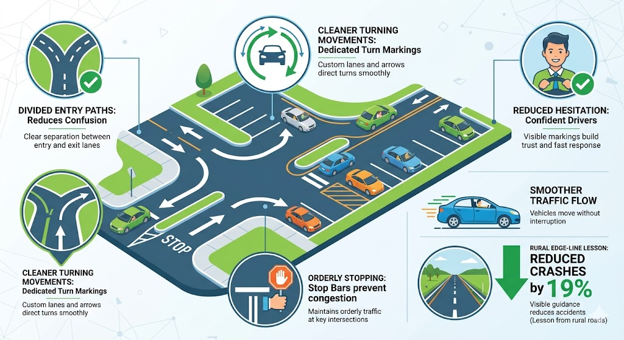
Entry and exit control shape the whole parking experience. The first decision a driver makes happens at the curb cut, not at the parking space. That is why lane markings, turn arrows, stop bars, and divided entry paths deserve close attention. Custom pavement striping gives you the freedom to map those movement points around actual property use instead of forcing a one-size layout.
That approach has support beyond parking lot design. Rural roads that received edge-line pavement markings recorded a 19% reduction in crashes after installation. Commercial lots move at lower speeds, but the lesson still applies. People respond to pavement line striping. Strong markings reduce hesitation, support cleaner turning movements, and keep vehicles moving through the property in a more organized way.
Creating Defined Driving Lanes to Reduce Confusion
Driving lanes do more than separate asphalt. They tell visitors where the property wants them to go. In a busy lot, that direction cuts down on wandering vehicle paths, uneven turning, and awkward merging between parked cars and moving traffic.
Defined lanes also help different users share the same site. A retail centre may need a strong front aisle near storefronts. A medical office may need shorter paths to accessible spaces. A mixed-use property may need better separation between customer traffic and service movement. Once the lane layout reflects property use, the lot starts working with traffic instead of reacting to it.
Organising Parking Spaces to Prevent Congestion
Parking layout affects flow more than many owners expect. Stall angle, row spacing, end caps, reserved zones, and loading access all influence how quickly drivers park and exit the aisle. When those details line up, circulation feels smoother across the full lot.
| Parking Area Need | Striping Choice | Traffic Benefit |
|---|---|---|
| Retail frontage | Angled spaces with directional arrows | Faster turnover near entrances |
| Office or medical rows | Straight stalls with wider aisle guidance | Steadier movement during arrival peaks |
| Pickup or short-stay zones | Marked reserved spaces and curb labels | Cleaner separation between quick stops and regular parking |
| Large multi-tenant lots | Numbered sections and clear symbols | Easier wayfinding across a wider site |
A table like this shows the bigger point. Striping should respond to usage, not just surface size. In many properties, pavement line striping helps owners turn a crowded-looking lot into a lot that feels organized and easier to navigate.
Managing Pedestrian Crosswalks and Safety Zones
Pedestrian movement affects vehicle flow in every busy commercial lot. Crosswalks, hatch zones, stop bars, and walkway connectors tell drivers where foot traffic will appear next. When those zones stand out, movement through the lot becomes more predictable and more polished.
This is where custom pavement striping adds depth to a property plan. Instead of dropping crosswalks anywhere near an entrance, you can align them with storefronts, tenant doors, cart paths, curb ramps, and building access points. That keeps people moving along expected routes while helping drivers read the lot earlier.
At Yellow Dawg Striping, we plan markings around how customers, tenants, delivery teams, and staff actually use a property. We look at movement first, then build the striping plan around it so the lot feels organized from entrance to exit.
Supporting ADA Parking Layouts Without Disrupting Flow
ADA parking should feel integrated into the site, not squeezed into whatever space remains. Good placement keeps accessible parking near the right access points while also protecting circulation through main drive aisles. That balance takes more than compliance knowledge. It takes layout discipline.
When ADA spaces, access aisles, route markings, and adjacent directional cues work together, the lot serves more users without interrupting traffic movement. Owners get a layout that supports accessibility and keeps the full property easier to navigate.
Using Arrows, Symbols, and Signage for Better Navigation
Directional arrows, reserved-use labels, fire lane markings, numbers, symbols, and pavement messages all strengthen navigation. These details may look small on paper, but they guide quick decisions in busy lots.
A driver entering a large commercial site should know where to turn, where to slow, where not to stop, and where special-use areas begin. That kind of pavement line striping saves time across hundreds of movements. It also supports curb appeal because an organized lot looks managed, not patched together.
How Pavement Line Striping Adds Value for Property Owners
Traffic flow is the first gain owners notice, but the business value goes further. Better striping supports tenant access, protects site image, improves use of parking inventory, and helps owners get more function from the same paved area. Custom pavement striping also helps separate customer parking from pickup areas, service movement, and reserved spaces without making the lot feel cluttered.
For owners and managers, that translates into a property that works harder every day. Visitors find routes faster. Staff move through the site with fewer interruptions. Vendors identify service areas sooner. The lot feels maintained, and that visual discipline supports the brand of the property itself.
Why Choose Yellow Dawg Striping for Pavement Line Striping Projects
Yellow Dawg Striping fits this work because it treats striping as a core commercial service, not a simple repaint job. The company handles custom parking lot layouts, logo stencils, traffic control markings, directional arrows, numbering systems, pavement messages, and ADA-focused layouts for commercial properties.
It is also part of the Jet-Black franchise network, which reports more than 500,000 completed pavement maintenance jobs since 1987.
At Yellow Dawg Striping, we build each plan around how your property functions day to day, and we connect striping with the broader pavement picture when needed.
● We create custom stencils for logos, numbers, symbols, and site-specific messages.
● We support ADA-compliant layouts, traffic guidance, and organized vehicle circulation.
● We can also coordinate striping with sealcoating, crack filling, signage, wheel stops, and lot redesign work.
That mix gives property owners a stronger result. The lot looks sharper, moves better, and supports daily use with more consistency.
Conclusion
Busy commercial parking lots perform best when layout and movement work together from the first turn-in to the final exit. Entry paths, lane guidance, parking layout, pedestrian routes, ADA placement, and directional markings all shape how the property feels to drivers and visitors. Pavement line striping helps you turn a busy lot into a more organized, more efficient part of the property experience.
If you want a striping plan built around traffic flow, site function, and long-term appearance, contact us today and let us help you map the next upgrade for your lot.
FAQs
-
Retail centres, office parks, medical plazas, schools, warehouses, apartment communities, and mixed-use properties benefit the most because they manage multiple traffic patterns across one paved area.
-
Yes. Marked loading areas, short-stay zones, directional arrows, and reserved-use spaces help delivery drivers and pickup traffic move without interrupting regular customer parking.
-
Custom stencils allow owners to add logos, numbers, reserved labels, safety messages, and branded markings that support navigation and property identity at the same time.
-
In many cases, yes. If traffic patterns, tenant use, or parking demand have changed, owners often get better results by updating the layout before repainting lines.
-
Yes. In large parking areas, arrows, numbers, symbols, and marked zones help drivers make faster decisions and move through the property with less delay.