Why Industrial Pavement Striping Is Essential for Warehouses, Distribution Centers, and Manufacturing Sites
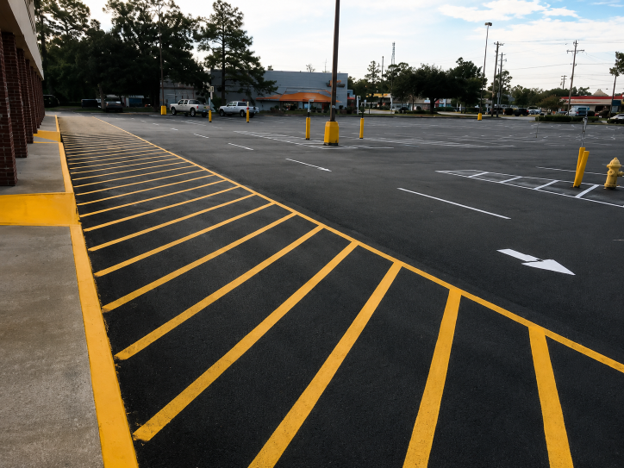
Have you ever pulled into a warehouse or distribution yard and felt, almost right away, that the place just worked? Trucks moved where they should. Staff knew where to walk. Forklifts had room to travel. Nothing felt crowded or random. That kind of flow does not come from luck. It comes from layout, planning, and the markings that guide every move across the site. Industrial pavement striping helps you shape that flow.
It gives structure to daily activity, helps teams move with less friction, and turns a busy property into a more disciplined operation.
The Role of Pavement Striping in Facility Operations
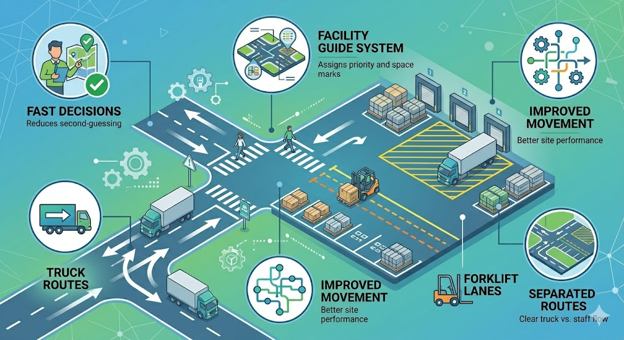
A busy industrial site runs on movement. Trucks arrive on schedule. Forklifts move stock from one zone to another. Staff cross lanes, loading areas, and parking sections all day. When the markings on the ground support that movement, the site performs better.
That is the part that many property owners notice late. Pavement striping is not decoration. It works like a guide system for the whole facility. It separates routes, assigns space, signals priority, and helps people make fast decisions without stopping to second-guess. A marked truck lane tells drivers where to travel. A painted pedestrian route tells staff where to cross. A loading zone, once marked with intent, starts doing its job better.
Important Areas That Need Pavement Markings in Industrial Facilities
Not every part of an industrial property serves the same function. Each area has its own demand, and the markings should reflect that. In larger sites, industrial pavement striping usually covers far more than parking stalls.
| Value Area | What Good Striping Does on Site | Why It Helps the Facility |
|---|---|---|
| Traffic movement | Mark truck lanes, forklift paths, and staff walkways so people know where to go | Keeps movement smoother during busy hours |
| Workplace safety | Separates people from equipment zones and marks stop points, crossings, and caution areas | Helps reduce mix-ups in active work areas |
| Loading efficiency | Defines dock approaches, trailer spots, staging lanes, and waiting zones | Makes loading and unloading easier to manage |
| Parking control | Organizes employee parking, visitor spaces, ADA stalls, and no-parking sections | Keeps access more orderly from the start of the day |
| Space use | Turns open pavement into assigned working zones with a purpose | Helps teams use the site better without wasting room |
| Compliance support | Mark ADA areas, fire lanes, access aisles, and restricted sections properly | Helps the property stay aligned with site requirements |
| Site appearance | Gives the pavement a neat, maintained, professional look | Leaves a better impression on drivers, staff, and visitors |
| Daily management | Makes routes, zones, and operating areas easier to monitor | Saves time for managers handling a busy property |
The strongest sites treat these areas as one connected layout. That is where better organisation starts.
How Industrial Pavement Striping Brings Value to Industrial Facilities
Industrial facilities perform better when every lane, zone, and access point has a defined purpose. This is where pavement striping adds value, helping property owners improve movement, organize space more effectively, and support safer daily operations across the site.
Improves Traffic Flow for Trucks, Forklifts, and Staff Movement
Flow is the first big win. When trucks, forklifts, and employees share one property, you need visible direction. Marked lanes, turning guides, crosswalks, and stop points make movement easier to manage. Drivers spend less time figuring out where to go. Operators stay within assigned routes. Staff move through the site with fewer interruptions.
A before-and-after safety study found that installing edge line markings on rural two-lane highways reduced crashes by 19%. Industrial sites are different, yes, but the principle still holds. Visual direction changes how people move.
Reduces Workplace Accidents and Safety Risks
Safety improves when the ground itself communicates. Forklift lanes, pedestrian paths, dock edges, stop bars, and no-parking zones help everyone read the site faster. That helps teams work with more consistency.
This does not mean a few painted lines solve everything. It means the markings support daily behavior. Staff know where to walk. Operators know where to slow down. Delivery drivers see where staging begins and ends. Those visual cues shape how the property functions through every shift.
Supports OSHA and ADA Compliance Requirements
Industrial properties have to think beyond movement alone. They also need layouts that respect access and compliance standards. ADA spaces need proper spacing and access aisles. Traffic areas need legible markings. Safety zones need visible boundaries.
Good striping helps property owners support these requirements in a direct way. It also helps visitors, contractors, and temporary drivers move through the property with less hesitation. When the surface markings line up with site rules, operations feel more polished and more intentional.
Defines Loading Zones, Parking Areas, and Restricted Sections
Every industrial property has zones that need a job description. Loading areas handle trailers and freight. Parking sections serve staff and visitors. Restricted areas hold equipment, storage, or controlled-use access. When these zones blend, the site loses efficiency.
Markings fix that. They assign purpose to space. They help you separate active loading from standard parking. They help you reserve room for trailers, define approach lanes, and mark high-value yard sections. Over time, that gives managers better use of the site without adding square footage.
Improves Site Appearance and Professional Standards
A well-marked property looks managed. That may sound simple, but it has weight. Clean lines, fresh symbols, and organized lanes signal discipline. Visitors notice it. Delivery teams notice it. Tenants, vendors, and site inspectors notice it too.
A sharp surface layout tells people that the facility gets attention. On industrial properties, appearance is not just cosmetic. It supports credibility. It tells others that the operation has standards.
Helps Facility Managers Maintain Organized Operations
This is where the long-term value comes in. Managers need a site they can monitor without constant correction. Marked routes, designated parking, dock numbering, and visible boundaries make oversight easier. Industrial pavement striping supports that by turning the ground into a working map.
Not flashy. Still important. A layout that stays readable helps managers review traffic, space use, staging, and access with far less friction.
Why Choose Yellow Dawg Striping for Industrial Pavement Striping
Yellow Dawg Striping brings a strong fit for industrial properties because the company works beyond basic parking lot layouts. We support large-scale striping through a nationwide pavement maintenance network and handle warehouse-style markings, traffic control markings, ADA layouts, custom stencils, and broad commercial surfaces. That range helps warehouses, manufacturing sites, and distribution centers manage movement with more structure.
At Yellow Dawg Striping, we also focus on how a site operates, not just where paint goes. That makes a difference on properties with truck routes, forklift corridors, loading zones, and safety-marked sections. We also help clients keep more services under one roof, which saves time and makes maintenance easier to coordinate.
A few standout strengths include:
● Nationwide support for industrial and multi-site projects
● Durable striping products, ADA-focused layouts, and custom messages or numbered zones
● Access to related services such as sealcoating, crack sealing, wheel stops, signage, asphalt repair, and paving
Industrial Pavement Striping Maintenance and Repainting Strategies
Good markings need follow-up. Heavy trucks, daily forklift traffic, weather exposure, and turning pressure wear lines down over time. That is normal. The answer is not to wait until everything fades.
Start with the zones that carry the most movement. Truck lanes, dock approaches, forklift routes, fire lanes, and ADA spaces usually need the closest watch. Then review stencil readability, turning markers, and boundary lines around staging or restricted areas. Surface wear does not show up evenly, so a one-size schedule rarely works well.
The most effective repainting strategy ties directly to site use. High-traffic sections get faster review. Lower-use sections can follow a wider cycle. Industrial pavement striping delivers the best result when facility managers treat maintenance as part of operations planning, not as a last-minute touch-up.
Conclusion
Warehouses, distribution centers, and manufacturing sites depend on movement, space control, and strong organisation. Pavement markings support all three. They help direct traffic, organize loading and parking, support compliance goals, and give the property a more polished appearance.
Over time, that adds up to a better-run facility. If you want a layout that works harder for your team, now is a smart time to invest in industrial pavement striping. Reach out to Yellow Dawg Striping today, and let us help you plan, mark, and maintain a site that works better from the ground up.
FAQs
-
Traffic coatings are typically used at most industrial sites because they are durable, promote visibility, and adhere to surfaces. The right selection will be based on traffic volume, climate, surface condition, and frequency of keeping the surface active.
-
Yes. There are many projects that are executed in phases. One section can be striped at a time, allowing for continued truck access, staff parking, and loading activity with minimal disruption.
-
Good results are generally achieved with dry, moderate weather. Conditions for coatings to cure effectively, as well as for crews to make good use of their working day, are during the middle of the year, when the weather is fairly flat.
-
Often, yes. In larger facilities, teams can use numbered bays, directional arrows, caution text, dock labels, and storage zone markings to navigate and monitor movement and location.
-
If traffic has shifted or new equipment is in place, or new parking needs are created, or dock operations have grown, the layout may need to be redesigned more than just repainted.