
Long-Lasting Pavement Crack Repair for Commercial Parking Lots
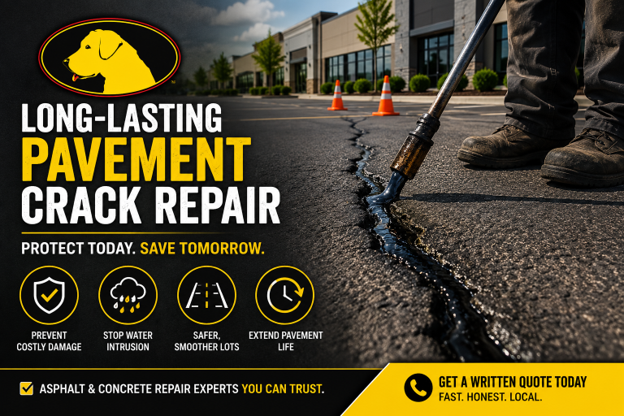
A hairline crack in your parking lot does not look like a problem. It looks like a cosmetic issue you can deal with later. That is exactly how small cracks become expensive ones.
Water gets into the crack, works its way into the base underneath, and starts breaking the pavement down from the inside where you cannot see it. Long-lasting pavement crack repair is what stops that cycle before it turns into a pothole, a liability claim, or a full parking lot replacement.
Yellow Dawg® works with property managers, HOAs, and business owners across the Tampa Bay area to catch these cracks early and repair them properly, so a small maintenance job does not turn into much larger and more expensive repair.
Why Small Cracks Turn Into Big Problems
Cracks in asphalt or concrete may look minor at first, but they open a path for water, debris, and weather damage to move below the surface. Once water reaches the base layer, it softens the ground that holds your pavement up. Add traffic weight on top of that softened base, and cracks widen fast.
This is why property owners who wait a season "to see how bad it gets" often end up paying for patching, then patching again, then a full resurface, when timely crack sealing may have prevented the damage from progressing. Long-lasting pavement crack repair is not about fixing the crack you can see. It is about protecting everything underneath it.
Parking Lot Crack Repair: When Timing Matters
Parking lot crack repair is often needed when surface cracks begin spreading across traffic lanes or parking stalls. In Florida, that timing question comes down to one thing: rain. Cracks that go into the rainy season unsealed take on water every time it storms, and that open cracks can allow water to enter the pavement structure.
Filling cracks before the wet months hit is one of the simplest ways to get long-lasting pavement crack repair out of a routine maintenance visit, instead of an emergency call after a lot starts pooling water or heaving.
There is also a liability side to this. Cracked or uneven pavement can create safety concerns for pedestrians and vehicles, making timely maintenance an important part of property upkeep.
What Actually Makes Crack Repair "Long-Lasting"
Not every crack repair holds up the same way, and this is where a lot of property owners get surprised. A rushed, cold-applied filler poured into a dirty, wet crack might look fine for a few months and then pull loose the first time the pavement expands and contracts with the weather.
Repairs that actually last start with prepping the crack itself: clearing out debris, drying the crack fully, and using a hot-applied, rubberized material that flexes with the pavement instead of cracking again alongside it. That flexibility matters more than most people expect. Florida pavement heats up and cools down constantly, and a rigid filler simply cannot keep up with that movement the way a properly applied hot-pour sealant can.
● Asphalt Pavement Crack Repair is the right call for asphalt surfaces showing early wear, separation, or weather damage. Timely service here helps preserve appearance, improve safety, and support long-lasting pavement crack repair across the whole lot, not just the section that looks worst.
● Concrete Pavement Crack Repair works differently. Concrete slabs crack when they shift or separate rather than simply wearing down, so addressing those cracks early helps reduce trip hazards, surface breakdown, and the kind of structural damage that is much harder to reverse once it sets in.
| Surface Type | Common Crack Cause | Repair Approach | Risk if Delayed |
|---|---|---|---|
| Asphalt | Weather cycling, traffic wear, UV exposure | Hot-pour rubberized crack sealing | Water intrusion, base failure, potholes |
| Concrete | Slab shifting, joint separation | Sealant injection, joint repair | Trip hazards, slab breakup, structural cracking |
Signs Your Parking Lot Needs Crack Repair Now
● Thin, spider-web style cracks spreading across drive lanes or stalls
● Cracks running parallel to curbs or expansion joints
● Standing water collecting near cracked areas after rain
● Cracks wide enough to catch a shoe heel or shopping cart wheel
● Older crack fill that has pulled away, leaving the crack open again
If you are seeing more than one of these, it is worth having someone walk the lot before the next storm rolls through.
Get a Written Quote From Yellow Dawg
Small cracks are the cheapest problem your parking lot will ever have. Left alone, they turn into potholes, drainage issues, and liability risk that costs far more to fix.
Yellow Dawg can walk your lot, tell you honestly what needs attention now versus what can wait, and provide a written quote for long-lasting pavement crack repair, whether that means a straightforward crack seal or a broader look at your pavement's condition.
Contact Yellow Dawg for a written quote
FAQ
-
A properly prepared, hot-applied crack seal typically holds up for one to three years depending on traffic volume and weather exposure, though it should be checked as part of your regular pavement inspections rather than assumed to be permanent.
-
For a single homeowner driveway, maybe. For a commercial parking lot, DIY fillers usually skip proper cleaning and drying of the crack first, which is the step that determines whether the repair actually holds. A failed DIY patch often costs more to fix than doing it right the first time.
-
Straight-line cracks can usually be filled and sealed. Interconnected, alligator-pattern cracking usually means the base underneath has already failed, and filling will not fix that. That kind of damage needs patching or a deeper repair, not surface sealing.
-
Crack repair itself is separate from striping, but a lot with heavy cracking near accessible parking spaces or paths can create trip hazards that affect compliance. It is worth having both checked in the same visit.
-
At least once a year, and ideally before the rainy season, since that is when unsealed cracks do the most damage.