
Why Asphalt Doesn't Age Well Without Maintenance and Repair
Asphalt looks dependable the day it goes down. It's smooth, dark, and solid, and most property owners walk away from a fresh paving job assuming the hard part is done. It isn't. From the moment the surface cures, the sun, water, and daily traffic start working against it. The breakdown is slow at first, easy to miss, and then suddenly expensive.
This blog explains how asphalt actually deteriorates, what each stage of that process looks like, and why consistent pavement maintenance and repair are the only thing that keeps a surface from failing ahead of schedule. By the end, you'll have a clear picture of what's happening under your feet and what to do about it.
How Asphalt Breaks Down Over Time
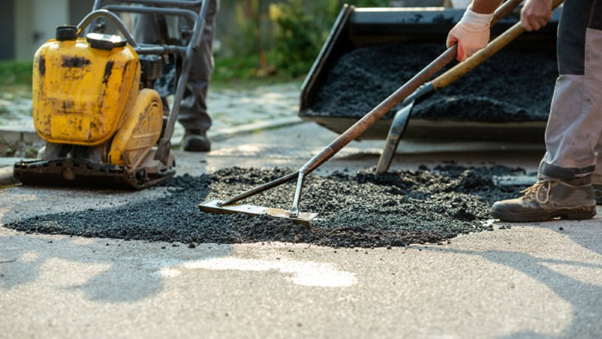
Asphalt doesn't fail in a single event. It weakens gradually through a chain of connected processes, each one making the surface more vulnerable to the next. Most of the damage is well underway before it becomes visible, which is exactly why so many property owners feel caught off guard when repairs suddenly seem urgent. Here's what that progression actually looks like.
Oxidation and Surface Hardening
The sun starts breaking down asphalt almost immediately after it's laid. UV rays attack the binder that holds the asphalt mix together, causing the surface to oxidize and lose its flexibility over time. You'll notice it first as a color shift, from the deep black of fresh pavement to a faded, washed-out gray.
Once the surface hardens, it can no longer flex naturally under the weight of vehicles. Small movements that a healthy surface would absorb start producing cracks instead. At that point, the deterioration picks up speed.
Industrial-grade sealcoating slows this process significantly—$1 spent on sealcoating now saves $10 in future repaving costs. It creates a protective layer that reduces how much UV exposure the surface takes, keeps the binder intact longer, and buys the pavement years of additional life. Without it, the timeline from new to visibly damaged shortens faster than most people expect.
Water Penetration and Subbase Damage
Water is the most destructive force asphalt faces over its lifetime. It doesn't need a large opening to cause serious damage. A small surface crack is enough. Water gets in, and in colder climates, the freeze-thaw cycle takes over, pushing the crack wider with every temperature swing until it reaches the subbase.
Water damage progresses in three predictable stages:
Seepage: Water enters small cracks.
Expansion: Freeze-thaw cycles push the asphalt apart.
Saturation: The subbase turns to mud, losing its strength.
Once the subbase gets saturated, it loses its ability to bear load. The pavement above it starts to flex in ways it wasn't designed to, and the cracking that follows can't be fixed with surface repairs alone. At that stage, you're looking at far more extensive and far more expensive work.
The straightforward way to stop this is to crack-seal before water finds its way in—$1 spent on crack sealing now saves $10 in future repaving costs. Industrial-grade crackfiller stays pliable through harsh winter temperatures and resists the kind of splitting that cheaper products can't handle. Filling a crack early costs a fraction of what subbase repair costs later.
Traffic Load and Surface Fatigue
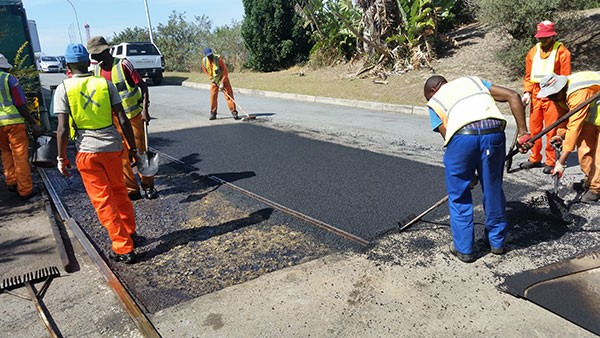
Every vehicle that uses a parking lot puts mechanical stress on the surface. Over time, that repeated loading produces fatigue cracking, a spreading network of interconnected cracks that tends to appear in sections of the lot that take the most traffic. Heavy delivery trucks and service vehicles accelerate this considerably.
Fatigue cracking is a later-stage sign. By the time you see it across a noticeable stretch of pavement, the surface has typically been under-maintained for years. Hot asphalt patchwork can address localized fatigue damage effectively, but only when the subbase beneath it is still structurally sound. If it isn't, patching treats the symptom rather than the problem.
Neglected Cracks Becoming Potholes
A crack that survives one winter without being sealed usually gets worse. By the second or third season, water and freeze-thaw damage have widened it enough to become a pothole. That shift from crack to pothole isn't just cosmetic. Potholes create real liability exposure for property owners when vehicles are damaged or people are injured.
The repair cost of a pothole is significantly higher than the cost of crack sealing that would have prevented it. And it doesn't stop there. Left long enough, pothole damage works its way into the subbase, at which point the scope of repairs grows again. This whole progression, from surface crack to pothole to structural failure, is predictable. It's also almost entirely preventable with a basic maintenance routine in place.
Conclusion
A parking lot records the maintenance decisions made over its lifetime. Neglect shows up in the surface, in the cracks, the fading, the uneven patches, and customers and tenants read those signals whether they realize it or not.
As commercial properties face rising liability exposure and tighter operating budgets, treating pavement care as a long-term investment rather than a recurring inconvenience makes more financial sense than it ever has. The lots that hold up best over ten or twenty years aren't the most expensive ones. They're the ones that got steady, consistent attention from the start.
At Yellow Dawg Asphalt, we help commercial properties stay ahead of pavement damage with honest assessments and reliable maintenance solutions. Backed by the nationwide Jet-Black Franchise Group, our team delivers proven results. Contact us today to discuss a maintenance plan that protects your property long term.
FAQs
-
Surface oxidation begins almost immediately after paving. Visible fading typically appears within the first two to three years, and the rate of deterioration picks up considerably without sealcoating and regular upkeep in place.
-
Most commercial surfaces benefit from sealcoating every two to three years. Lots that handle heavy traffic or sit in climates with significant temperature swings may need attention more frequently to stay protected.
-
Yes. Sealing cracks before water penetrates the subbase stops the progression that leads to potholes. Industrial-grade crackfiller holds through freeze-thaw cycles far better than standard products and keeps the entry point closed.
-
When the subbase is compromised or fatigue cracking covers a large area, patchwork treats the surface without addressing the structural problem underneath. At that point, full repaving typically becomes the more practical and cost-effective path forward.
-
Yes. Yellow Dawg Asphalt provides complete commercial pavement maintenance, repair, and replacement services, and connects clients to nationwide partners when a project requires a broader scope of work.